One Poem by E.K. Bartlett

Unabridged car banter

I am not a woman, but this thing that weeps at night 
that steals your smile
at the supermarket
and hides it in the tomato aisle.
I am a ravenous beast 
a warehouse of tears 
stored neatly in jugs 
for later indulgence, 
for eternal eruption
just you wait. I like to be 
squished
during sex
and not during sex.
Let me pluck 
your eyebrows.
When we pass mile marker 35
I get hungry
for pickled okra
and we share the whole 
jar. Look
at this finite
object of sustenance. 
Look at my tongue. 
Tongue of a woman? 
Didn’t think so. More like 
tongue of a spaceship 
probing for some blue star
we identified, but it’d take us 
a million years
to get to
and we’d still find ourselves 
lost.


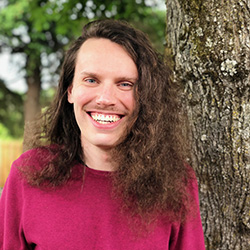
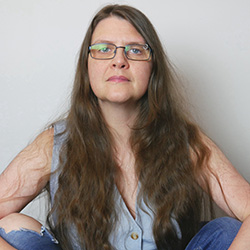
E.K. Bartlett is an Iowa-born, Paris-based writer and translator. Their work can be found in Asymptote, Fifth Wheel Press, new words {press}, Rust & Moth, Gigantic Sequins, among others. They currently run a radio show on World Radio Paris and work at an independent publishing house. Photo by Lea Volta.

One Poem by Lucy Jones

I am a god who never wanted to be holy

Somewhere between my prescribed blowjob eyes
And prettily breakable bones
Is a person who’s been run through with advances
And doesn’t want to be approached at all.

They don’t remember what not worrying about the motive under the table 
or recall trusting the hands opening for a shake then dealing
Trust they won’t wander toward places they want, cover my mouth, reach inside my sternum and pull out in a clawed fist whatever makes me write poetry, paint the mountains, and love somebody

I have met people who would eat my soul right in front of me, not from spite
But because there’s a reverence in consuming a person in front of them
Watch me claim you; watch me worship you so deeply you are inside of me

I have reached the point where I would rather burn my temples
Then garner praise or prayer. 
If I cannot have it on my terms, I don’t want it at all.


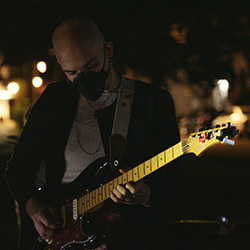
Lucy Jones (they/them) is a BIPOC, queer, and southern poet from East Tennessee who cares about the weight of words. They are a firm believer that poetry influences and shapes our reality, a sentiment that bleeds into their writing and is expressed with their free verse and confessional styles. Their identities influence the diction they write with and the content they write about, from the trees in their backyard to the abandoned buildings in their hometown and the experience of being mixed in a predominantly white community. They write to capture these images with poems, because if even one reader can feel a little less alone in these experiences, they feel lighter.

One Translation of Claire Star Finch by Sam Nartus-Fois

from Spit in my mouth then spit in my other mouth (Crache dans ma bouche puis crache dans mon autre bouche)

Part I

… huge bite and basically my stomach devours yours. Three of your fingers gag me, cherishing the mucus in the pink depths of my throat, your joints digging into my uvula. Four more bustle in my internal organs. Your body soaks me with a warm and sticky sexslime that drips on my knee, the top of my thigh, my hip bone. You stop at the bone to push your softish warmth on the hard bone, bruising your sensitive nerve endings in a cosy exaltation that mirrors the new regime. You are sexy like revolutionary theory, your eyes half shut and your tongue between your teeth. You are super punk with a beautiful style. The world is cruel, but your damp slits smile at me. Your strong odour merges with mine, also very strong, like two bodybuilders our emanations collide on the carpet oozing with sweat. I grab your heavy hips and crush your nerve endings pushing me up I topple you tenderly ensuring that my body never ceases its pressure against your slimy pubes. I swear I will remake you baby exactly as you want. And your new form I will create without any additional resources, nothing but the pressure of my tongue plunging down your open throat. The sun has not yet risen. The hole in the shutter is indiscernible from the sky, except that the shutter is made of wood and we stare at it from the bed. Little by little, as the sky lights up, the contrast becomes clear: we are inside and the sky is outside. The hole in the shutter becomes white, then a greyish blue, punctuated from time to time by the rustling of the leaves projecting disco lights in the air above the street. An energy gives way, but it is still too early for the sirens. 

***

When I fuck I feel soooooo full of life but now I am soooooo sad and lonely, I haven’t fucked in soooo long, at least since yesterday, my body collapses on itself, help me because I will probably die from my own unfucking, my own inability to transform the world in the way I know myself capable of transforming it: by the wishful projections of my skins and fluids! My tongue so deliciously tracing a new metaphysics! I am so unfucked that I unfuck and will undoubtedly die here. 

Here I am, surely dying. 

Well, if I die from this unfucking, I aim to produce an extra-significative life from my voluptuous remains. 

So, if I die from this painful solitude and the enormous and horrible weight of this lame and brutal world…

Let my overdetermined body be stripped of its skin and bare still until the entire world is convinced that my anatomy has never had any prehistoric significance. 

Let the crows gush out from every hole that is left. Let these same crows find every person I have ever loved and give them the best orgasms of their lives: their bodies will rephrase the meaning. 

If ever you have betrayed me or haven’t loved me, then no crow will come for you and you will die with the rest of the dead world, your motionless bodies petrified like big pieces of dull and ugly stone, authority weighing on your crotch as you sink down the quicksand. 

Let you be bothered and terribly envious of power forever; your organs will never know ecstasy. When you come, the feeling will be insignificant and you will be condemned to mistake this insignificance for the height of pleasure. 

Yet, I am not dead. I am still here. And my organs still demand the most political of sensations. A writer wrote that writing is like inviting someone in between your spread legs. Here are my legs, spread wide. 

***

I don’t want others to find me intelligent or pretty and I don’t want anyone’s admiration: I want the existing world and its language to burn and I want to burn with them. 

Although, if anyone is curious: I am sexually attractive because my skin stretches easily and my vocabulary is vast. My pecs inflate when I think big thoughts. My body has the perfect texture exactly where it needs to. Saliva is always gushing out of my mouth. It’s wet, therefore it’s sexy.

Sometimes, my desire is so strong that I fall to my knees but that is exactly where I look sexy, so I stay there. 

My body throbs inside where you struck my organs and I have several things to say about form. 

How stupid it is to want a body. This stupid body. Dumb girlbody. Dumbass girlbeast fuckbody stupid. Fuckbeast dumbass fuckgirl. In a body.

Who would want this? 

Yet I want a big house!

I will fuck you in my big house. I will have a big house where I will prepare dinner for my fourteen thousand children. 

I reproduced a lot because cultural transmission is very important to me. 

I am really sorry: if I am bitter, it’s because I have been hurt. 

I am stupid and I am hurt because I was taught that that is what suits my morphology. I love living what taxonomy has in store for me. It gives me a beautiful purpose. When I cry, there are films to tell me what’s going on. Sometimes I’m unpredictable, which is part of my character. It’s linked to what I consume. 

Oh!

I drank too much sugar so I’m sick!

I have been sickened!

Let the horizon consume my enemies! Let me be able to feel patience for those who are younger!

Let me find inspiration instead of jealousy. 

Let my jealousy, if I should feel it, advance as large spiny tentacles piercing their young creative hearts, squeezing their spleen and tying them up with my bile!

Let nobody ever hurt me!

Let us all sleep through the night again!

Let the night last for a long, long time!!!!!!!!!!!!

***

Here, on all fours like a rolled-up animal, my underside winking naively at all observers, I sob!!! The vicissitudes of my own solitude are more than I can bear!

And If even I cannot confront these vicissitudes, who will? 

The siphon oozes a foul smell which fills the box where I sleep. The worried siphon fragrance is the fragrance of my soul, even though I would not even write of this great subject, I would simply become calmly monstrous, then insignificant, my politics: uninspiring. 

Momentarily soaked with hope in a future that I cannot envision yet, I prepare my body for sex. Sex, this great leveller of experience, anarchist ambrosia, the vague humanism towards which I am headed even though I am certainly not a humanist, knowing well that an odious common universality only serves to justify horror, that is to say, reinforce the norm. I trim my nails. I toss the clippings into the siphon in the sink. I remember this feeling in the tender parts that I cut too closely when you put your mouth around them. You feed them with your burning and spongy tongue, and with the suave inside of your cheeks, refusing typical categorisations of reproductive work, sucking my bloody cuticles, moulding reciprocity instead of causality.


Part II

This all seemed abstract to me, but then I meet you.

It’s cold. We wait to be allowed in. I had never seen you before. Your eyes burn with huge blazing holes at the front of my head then the back of my head then all my chakras especially those linked to sex and immortality. 

Someday soon, my tongue will clean your armpit. The hair will shine against my teeth and the drool will blend with the bitter taste of your old sweat. The cocktail of saliva and pheromones that will result from it will make tears run and will seal all the wrinkles around my eyes and I will finally look thirty again. 

You and I have a lot in common since we’re both against fascism. 

We also both believe that our bodies are infinite and that our moral duty is to fight for the emancipation of emotion and flesh by fighting to widen our experience of sexual sensations as well as for the general survival of all fucked individuals. 

You and I are afraid of confrontation, but we recognise that, in that case, it is a vital necessity. Fascists blend in with the crowd. They wait for us outside of lesbian bars and punk bars. They wait for us when we hoist our bodies on the platforms, loads of anonymous semen still running down along the creases between our legs. 

You and I, we know things about liberation and you press your mouth against mine so I can breathe your breathing and you swear through the hole in my throat that our sexual union will inspire us to live our lives EACH SECOND pushed to the most extreme of extreme of experiences until this lascivious deflagration destroys this abominable daily life, making it burn and collapse. 

Fighting is not naturally in my personality. I am not a naturally aggressive person. 

But I don’t want to die, I only want to shape my face into a hole I can push your face into. 

I just want to drink tons and tons of your salty tears. 

And I am completely brutalised from seeing you cry in pain, fear and sadness; I hate that you dehydrate yourself for so many sad tears. 

I want to be able to drink your tears of sex, cried not as a reaction to these nonsensical surroundings, but simply because I put the perfect quantity of lube on the outside of the largest part of my hand. Look how it shines. Then, because I am fundamentally empathetic, I follow a sign of water and naturally gifted at reading body language, I know exactly when to push super hard and close my fingers. 

I breathe your tears avidly, milking your tear ducts with my silky lips while you climb on my forearm like an unstoppable cargo train constantly and devotedly driving forward. You turn on my hand like a sustainably raised rotisserie chicken on a spit and I promise you to dedicate my earthly energies to the way my hand, pirouetting in you, translates into throbbing ripples on the surface of your skin. Your open mouth makes a huge damp stain which becomes even more damp thanks to the addition of these same salty tears. I put my tongue on this damp stain and breathe in the wet fabric inside of my own mouth. 

When you return to the bedroom after washing the dildos, I gag you with my entire body, invoking all the mimetic intentions of fantasy. You love it. You don’t like to communicate verbally, so our language is that of basic sensations, of small changes on your face. A great advantage of my cPTSD is my ability to read any changes on your face. 

I can also read any slight change on your ass. 

Like the way you have of pushing your asshole towards me when my tongue collides over and over with your dripping lily.

My spit has already flowed and your asshole glistens. I widen and flatten my tongue and push it against the surface of your anus. You push your anus towards me. I fall against you with my tongue. I use my legs to launch my body forward, my head beating rhythmically with my tongue, which beats against your ass. I lift my head up. I refine my tongue. I lick a circle around the rim of your asshole. 

Now, the texture of your hole is like wet rubber. Your wet rubber hole sucks me, and closes in. 

I dab it with my tongue. I slide my tongue in a spiral shape, starting out and getting closer to the centre. 

I am afraid of falling too deeply in any hole. I am skeptical about negative aesthetics, it seems to lack joy, yet, I want to obliterate myself in the bitter taste emanating from your ass. 

This work is a partial translation of Crache dans ma bouche puis crache dans mon autre bouche, by Claire Star Finch, originally published in French by Editions les Petits Matins.


Claire Star Finch is a writer, translator, and experimental performer, a member of the writer’s collective RER Q. Their literary performances and hybrid fiction-theory are particularly represented in artistic institutions in Europe and the US. They hold a PhD in gender studies. Crache dans ma bouche puis crache dans mon autre bouche is their first book, written directly in French. 


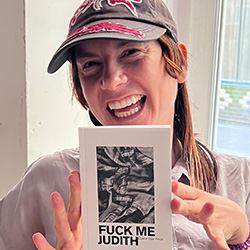
Sam Nartus-Fois is an emerging French and Italian to English translator and writer. Originally from France but now based in the UK, they have a Master’s degree in literary translation from the University of Essex and they are currently pursuing a PhD program in linguistics researching grammatical gender. He is co-editor at t-lit journal, and his work has been published in Sybil Journal and ALOCASIA

One Story by Grey Traynor

Ugh, My Memorial

I’m going to go ahead and say it; my memorial is tacky.

Tacky to me. Ill-considered to those who knew me. Forgettable to passersby.

And that’s who it’s really for, the ambling fools strolling around who never had the chance to meet my fine, smooth hand (the constant lotion, thank you); I’m nothing now but energetic air, yet I still apply my nightly La Mer—rub, rub, rub!

But the plaque leaves out my soft hands and the catch who had ‘em. Yes, the thesis statement of my entire goddamn life says: “Mitchell Trear 1954-1986 – A passionate soul who lived proud and walked tall” – I sound like one of those lifted trucks, used.

I blame my brother. Not the ginger dyslexic, but the one I hate. Ezekiel never could stomach that I was the more handsome version of him, softer nose and shoulders, a more self-assured ease about me, with a gentler-on-the-ears kind of name. It’s not my fault mother and father were in a Seventh-Day Adventist mood when he came scuttling out into the world; those sharp shoulders of his must’ve scarred my mother something fierce…

Thank god when I received my name, they were early adopters of the hippie movement—getting kicked out of stores for stomping in barefoot. Who knows, maybe my parents were just too lazy to peruse the bible for another vowel-loaded name when I came out waltzing, and I mean that sincerely, baby me was a stepper(!), a kicker—so graceful the turning, so learned the moves—I should have been a dancer, you know.

Now as glorified mist, I have trouble remembering why dear old mother and father stuck us with Grandma and never came back to deliver an annual set of rigid hugs to the children they abandoned, but I do remember when it was clear that Grandma had, by force, become the next great thing in parenting. It was my seventh birthday; the theme was Gunsmoke. I donned Chester B. Goode’s exact stiff hat, shirt, and suspenders and everyone was there to revel in it, in me, except, of course, my parents; their bumper scraping against the driveway on the night before, car weighed down by their packed belongings, including Grandma’s prized Hoover vacuum, was all the “unable to attend” they could provide their son and his tidy guest list.

“Oh boy, am I gonna need a bigger house,” Grandma kept joking to any of the party guests, parent or child. Stuck with three young children, Grandma looked like yesterday’s balloon amid the fresher ones taped along the ceiling line and littered across the floor, but not too many that someone might trip—it wasn’t my first time decorating.

What Grandma wanted to say was, “How am I, a working woman in her 50s, supposed to raise three more kids?!”

Though a question answered by her previous decades of proven maternal sacrifice, there was the occasional pleading call to my parents at their new address, her hot breath fogging the receiver: “Please, I beg you, come take your children…The smells oozing off these boys…It’s like rusted tuna on a hot curb!”

But the way Ezekiel tells it, Grandma was a hard woman who often forgot to feed us.

I say, imagine peeling yourself off the factory floor, eyes about to fall out from dragging them up and down a conveyor belt for eight hours, and then going home, always remembering to feed your children—it isn’t easy! Which is why I got good at slapping together PB&Js for myself and for Richard, my ginger brother who couldn’t read a one-item menu in size 72 font—Ezekiel could make his own sandwich at four years older, but he never did (the prick). Instead, he’d lumber over to his friend Burt’s and, with clasped, shaking hands, grovel for food like an infected peasant—my brother the dog!

And that’s how that rat bastard came to oversee my memorial: whining.

I was his brother—I AM his brother,” Ezekiel had yelled during a tender meeting that my friends, who I consider my actual family, next to Grandma and Richard, held in a Unitarian Church basement, the walls wood-paneled, the sticky, purple Kool-Aid provided.

I know for a fact Ezekiel wasn’t clued in about these meetings but I also know my brother, a painfully heterosexual diva in pleated pants, and his innate ability to sniff out something important with the sole goal of making that something all about him: he didn’t go to school for a month after JFK’s assassination and cried to everyone about the Kent State shootings (“Poor, Kent! The poor guy didn’t have a chance—he was somebody’s son!”)

I find the pairing of idiocy and narcissism a more terrible combination than good cheese with cheap wine or falling bombs and hard surfaces.

Now, it’s not that my friends gave up on my memorial though I will say they didn’t stand on the firmest of legs, those flitting pansies. But. Later. They did hold more-secret meetings in different church basements with organic Tang and doors that locked.

In the end, they decided to let Ezekiel concoct his own hollow tribute while choosing to package their brand of grief into an annual experience—the Mitchell Trear Toast—their bubbly way of saying, “Our poor, dead friend…Tequila or vodka?”

My friends still throw that party, but it’s also now in honor of Michael M., Teacup, George, and Elaine—there are nearly more “watchers,” like myself, these days than there are partiers but isn’t that how this particular cake slices?

Except, of course, there was no cake or ceremony at my “official” memorial. There was no one there at all except for the plaque installer; Ezekiel managed to run off everyone I actually love while he scheduled himself a dental cleaning that morning; to my benefit, it blossomed into a surprise root canal; his darling dentist was not gentle.

I guess when my remaining nearest and dearest join us dead, all that will be left is the tree and the meaningless words on it.

Don’t get me wrong, it’s a fine redwood, the sapling Ezekiel bitchily chose now towers as tall as the others. The trunk really filled out—a compliment never bestowed upon my physical form.

The superficial problem that remains is that my plaque and my tree feel hidden away in the park, an incorrect metaphor for Mitchell Trear, as I never lived my life in the back row. I was out and about—a star in the throng—part of a scene with my own decipherable shine.

And when I think of the living taking my falsified summary to mean I was some wallflower who never blossomed or stepped to the beat, I start to feel sad, less cheered up by the annual bash.

Until I see two young men, who look like I used to look, okay, sure, they’ve got better thighs, expansive, which certainly get to work as they strain and brace themselves against my tree.

It is in their twisting, wet expression that I feel honored, that I understand it all lives on, day-to-day, as I once did.

As I do.


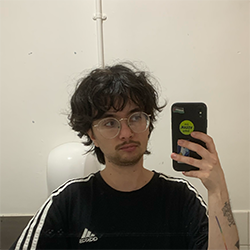
Grey Traynor (they/she/he) is a nonbinary, transfemme writer who has been published in XRAY, BULL, and DarkWinter. They attended the 2025 Tin House Summer Workshop and they read at the 2025 Portland Book Festival and are currently querying manuscripts. Find them on Instagram @greytraynor & at greytraynor.gay—Also, check out their gay romance podcast, Baby, Don’t Shoot (featuring a Luigi Mangione type), on Apple Podcasts, Spotify, or wherever you listen to pods!

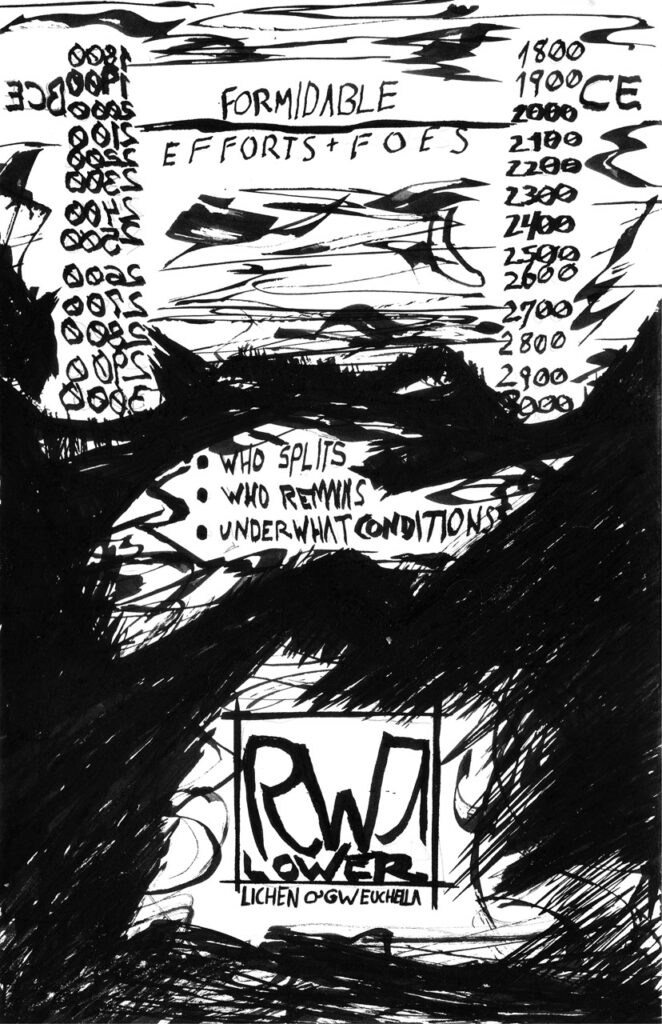
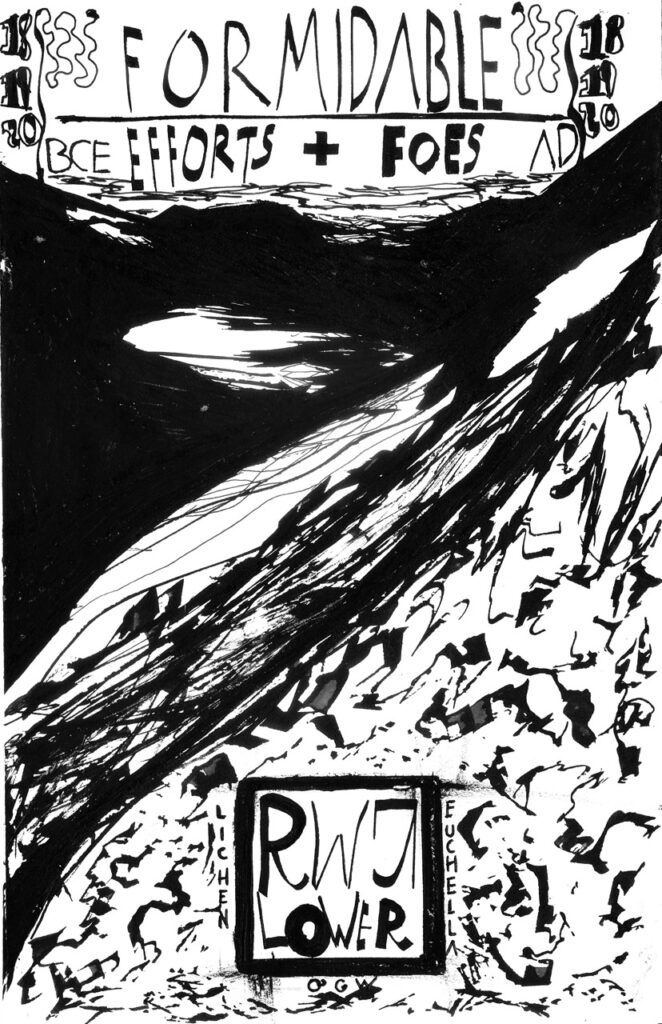
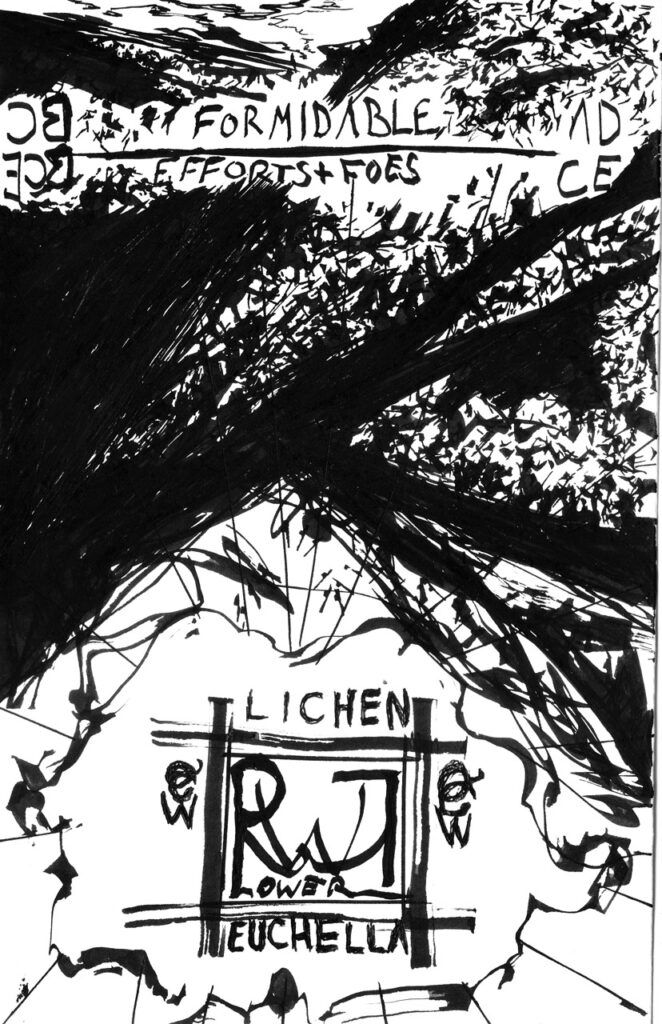
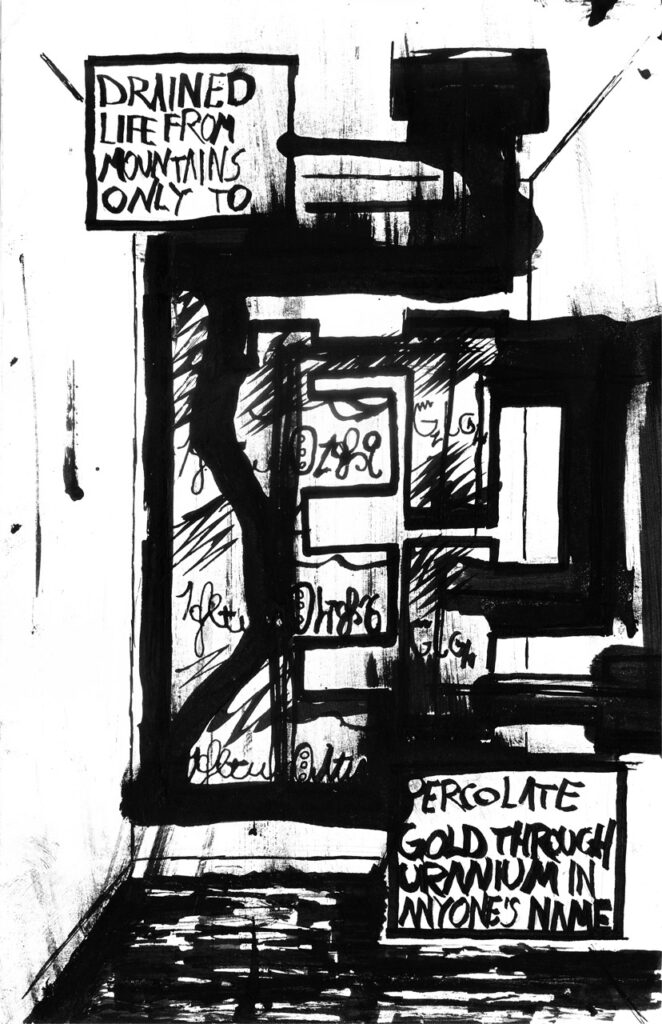
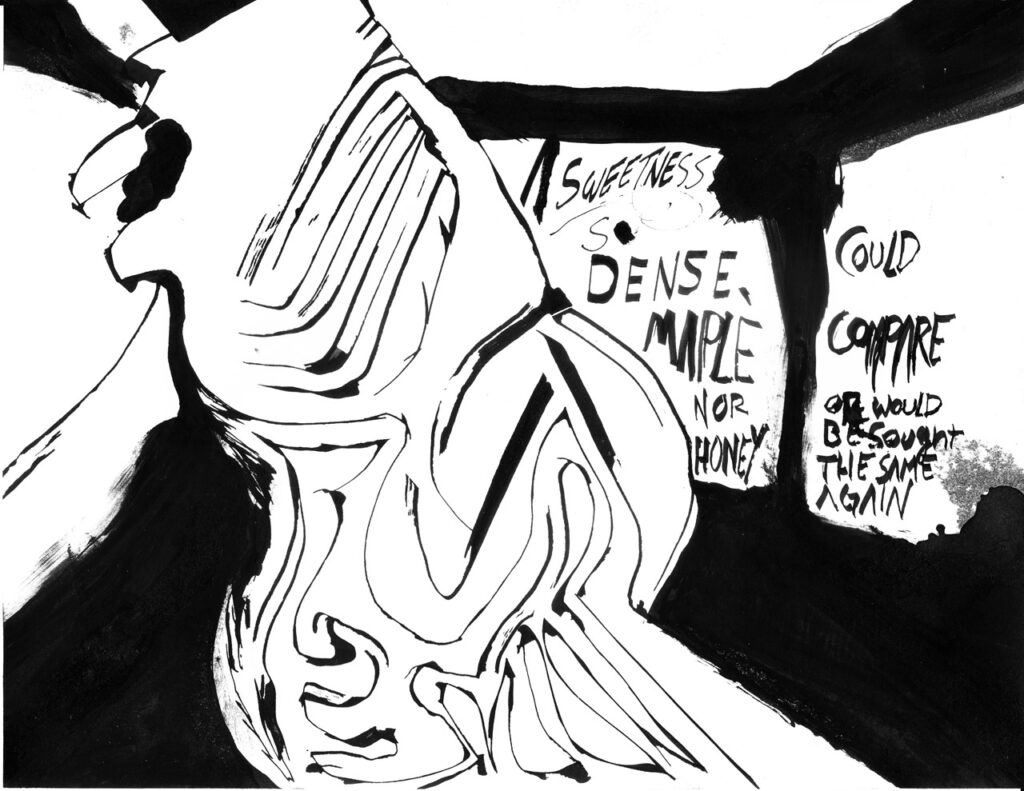
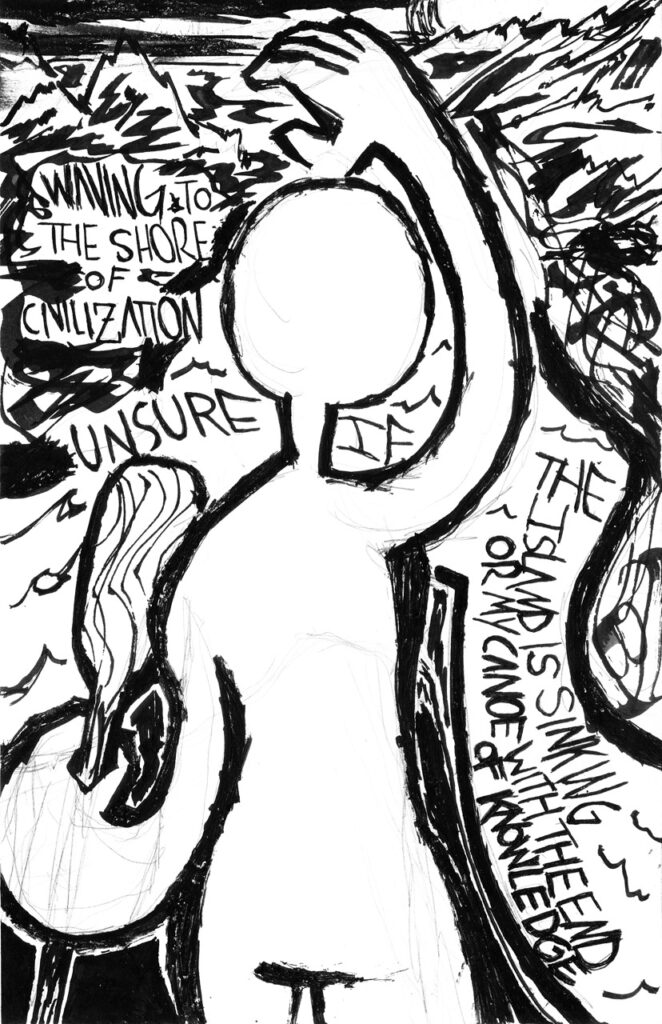
One Comic by Lichen

Lower


Lichen is a twospirit illustrator and speculative fiction writer who comes from a family of historically prominent Cherokee Nation citizens. In addition to drawing and writing, Lichen makes music as well as the occasional videogame, all driven by a passion for fostering interest in Indigenous cultures. During their spare time, Lichen can often be found watching unusual old films or learning about the plants and fungi that grow around them.

One Story by Sandra Alland

People Should Not Repeat Things Back To You


It bothers me when people repeat everything you say back to you.

“I wonder if you’re buying things right now?” I asked the person at the fancy used bookshop.

“You wonder if I’m buying things right now,” the person said back.

I stared at him and he stared back, like he was even repeating my stare. Then, like sometimes happens with people who repeat everything, he committed the further annoyance of repeating my question as his own.

“How much do you pay for books?” I asked. He took the thin book from my hands, then pushed it back to me and shrugged his cardiganed shoulders. 

“How much? Do I pay? For books?” he asked, squinting at me like I was the fullest Moon. 

Before I left I orbited him at tortoise pace, though I spent eight minutes instead of twenty-seven days. I tried to mimic synchronous lunar rotation by always keeping my face to him, which I admit was scowling a bit under the circle of my respirator. The book was a Harryette Mullen and I was only selling it because I was broke and his shop door was open and there were no stairs and no one was in there but him. 

*

Before the pandemic I used to take useless trips in a loop on the only subway in Scotland. Before the pandemic there were disabled seats on each train, though only one station with a lift. Now, two stations out of fifteen have elevators. People still don’t wear masks and you still bump your head if you’re standing up. 

Before the pandemic I’d ride around that small circle on orange patterned velour benches, remembering people who’d touched me with passion. On a trip that only led back to where it started, I’d make a wish at each station to honour them. Fifteen wishes didn’t take long, but it’s still too many stations to bore you with. I’ll provide highlights from the stops that have lift access now: 

• Govan: I wish all the closed-down local shops would reappear, and also the fish in the Gulf of Mexico.

• St. Enoch: I wish there were fourteen more stations with lifts.

*

“You’re not fully here until you’re over there,” wrote the poet Harryette Mullen in 1992, which was also before the pandemic. But simultaneously, like now, it was during the pandemic.

*

Someone repeating things back to you could be harmless. It could mean:

a/ The person didn’t hear you.

b/ The person is scared of a question and more scared of the answer.

But most of the time it is not harmless. The man in the bookshop last week didn’t like my mask or my watermelon hoodie with the Free Congo badge because they reflected back at him murders he wanted to ignore. If he’d bothered to read the Harryette Mullen he would’ve had inviting words to say that weren’t my questions: “The way we bruise and wilt, all perishable.”

*

While the Glasgow subway screeched through tiny, round, pre-pandemic tunnels, a person across from me would show their friend a video of a cat falling off a TV, or a can of mushy peas from the food bank. The subway is so small that you could reach across and high-five someone, and trade kinds of cans if you had lychees and wanted to be generous. 

The person who was so close would look like an ex I last saw twelve years ago under an ancient toll booth near my home, when she didn’t kiss me goodbye. Or like the ghost of a guy I had sex with after we climbed the wall of a non-ancient Toronto castle and nearly got eaten by a guard dog. I’ve made love to men in the oddest of places. I’ve made love to women who snort at the term “making love.” My body echoed back at me from most of their lips.

Glasgow’s subway opened in 1896, when there were also people who needed elevators. Also, elevators existed, including one up the Eiffel Tower. It was both before the pandemic and during the pandemic, and during eugenics and before eugenics. 

*

When people repeat your words back to you, they’re mocking your attempt at communication. Sometimes repetition is just buying them time, but mostly they do it to say, “You’re a fool and an inconvenience for wanting a different world!” or, “Don’t embarrass yourself by trying to be understood!” Also, they will say “make love” back to you, but rarely “fuck.” They won’t repeat “disabled,” “trans,” or the many many moons round and round of “disappeared.” Or this Harryette Mullen: “They starve for all the things we crave.”


Photo alt-text: A self-portrait of San, a 52-year-old white person with long brown hair, blue eyes, an eyebrow piercing and blue-rimmed metal glasses. They're wearing a low-cut sleeveless waistcoat and jeans with a hole in one knee, and sit cross-legged with arms around their knees. San looks directly into the camera with an open expression.

Sandra Alland (they/San) is a Glasgow writer and interdisciplinary artist who experiments with form and access. Winner of the bpNichol Chapbook Award and co-editor of Stairs and Whispers: D/deaf and Disabled Poets Write Back, San has published three poetry collections and two fiction chapbooks. San’s work examines history, alternate realities, qrip languages, anti-eugenics, class and political mourning. Other stories appear in Protest! (Comma Press), Thought X (Comma), We Were Always Here (404 Ink), Discover (British Council), Gutter, Extra Teeth, subTerrain, and The Deaf Poets Society. Photo by San. The Harryette Mullen quotes are from S*PeRM**K*T (Singing Horse Press);  San would not actually sell their copy because it’s too good. blissfultimes.ca.

Two Poems by robin herold

.once.upon.a.time.

in an advanced civilization
factories mass-produce

mechanical prosthetics
to aid workers in navigating

an inhospitable labor apparatus.
no one with fewer than three

arms can hold a job. there
are arm-jackers everywhere

& who could blame them.
the weather keeps getting worse.

each factory runs right up until
the weather halts it. sometimes

the people are the weather.
before long the world floods.

the prosthetics short-circuit
& detach & tide away. only then

do the workers re-member
all along they’ve been fish.


.in.the.bar.parking.lot.after.last.call.

—for e.

we looked up & wondered
about the swirling stars & how
pronouncing the word invents
even more of them—stars—
while i finished my fifth g&t.

                you don’t drink because—
                                 you didn’t say, but once
                                 i googled you & found
                                 the notion of your guilt
                                 compounding mine.

later, when i told you i hadn’t wept
in years, you’d remind me of that night
i was drunk. once,

because we both grew up
at bible camps, you asked
my favorite praise song
& i didn’t say, the one
you sang into the black
hole of my memory.


robin herold (she/it) is a bewitched songbird trained in creative writing & small group facilitation (Arizona State University MFA 2020). She is a queer, trans, autistic, mad songwriter-poet, a disordered organizer, & a white settler in New York’s Hudson River Valley—unceded Lenapehoking, contemporary & ancestral homeland of the Munsee Lenape & Esopus people. robin’s music, writing, & other offerings are freely available at patreon.com/robinherold.